Clockwork Vs. Filefinder: Which Executive Search Platform Is Right For Your Firm?
For executive search firms, choosing the right platform isn’t just about features—it’s about how well the system supports your search process, from initial research through to placement and client reporting.
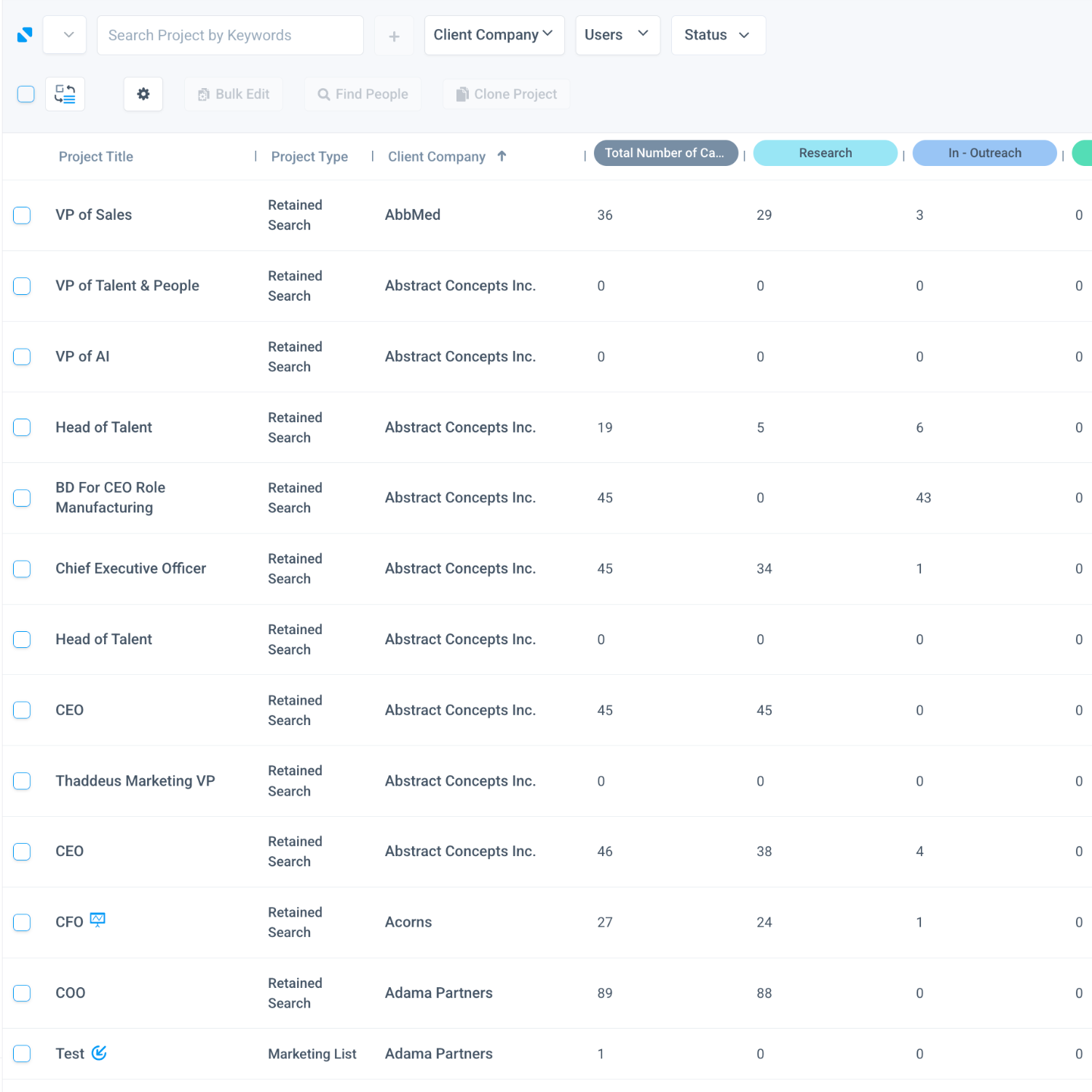
Both Clockwork and FileFinder are used by executive recruiters, but they are built on fundamentally different approaches. Clockwork is designed around structured, end-to-end search workflows, while FileFinder is centered on managing candidate and client data within a traditional database model.
This comparison breaks down the key differences to help you determine which platform best aligns with how your firm operates today—and how you plan to grow.
Key Differences at a Glance
- Workflow-first vs database-first
Clockwork is built around the retained search lifecycle, while FileFinder is centered on managing candidate records and assignments. - Embedded client reporting vs external reporting workflows
Clockwork generates reports directly from live search data within the client portal, while FileFinder typically relies on exporting and formatting information. - AI-assisted sourcing and rediscovery vs search-driven retrieval
Clockwork surfaces relevant candidates automatically and faster, while FileFinder depends on filters, tags, and recruiter-defined searches. - Unified visibility across searches vs record-level visibility
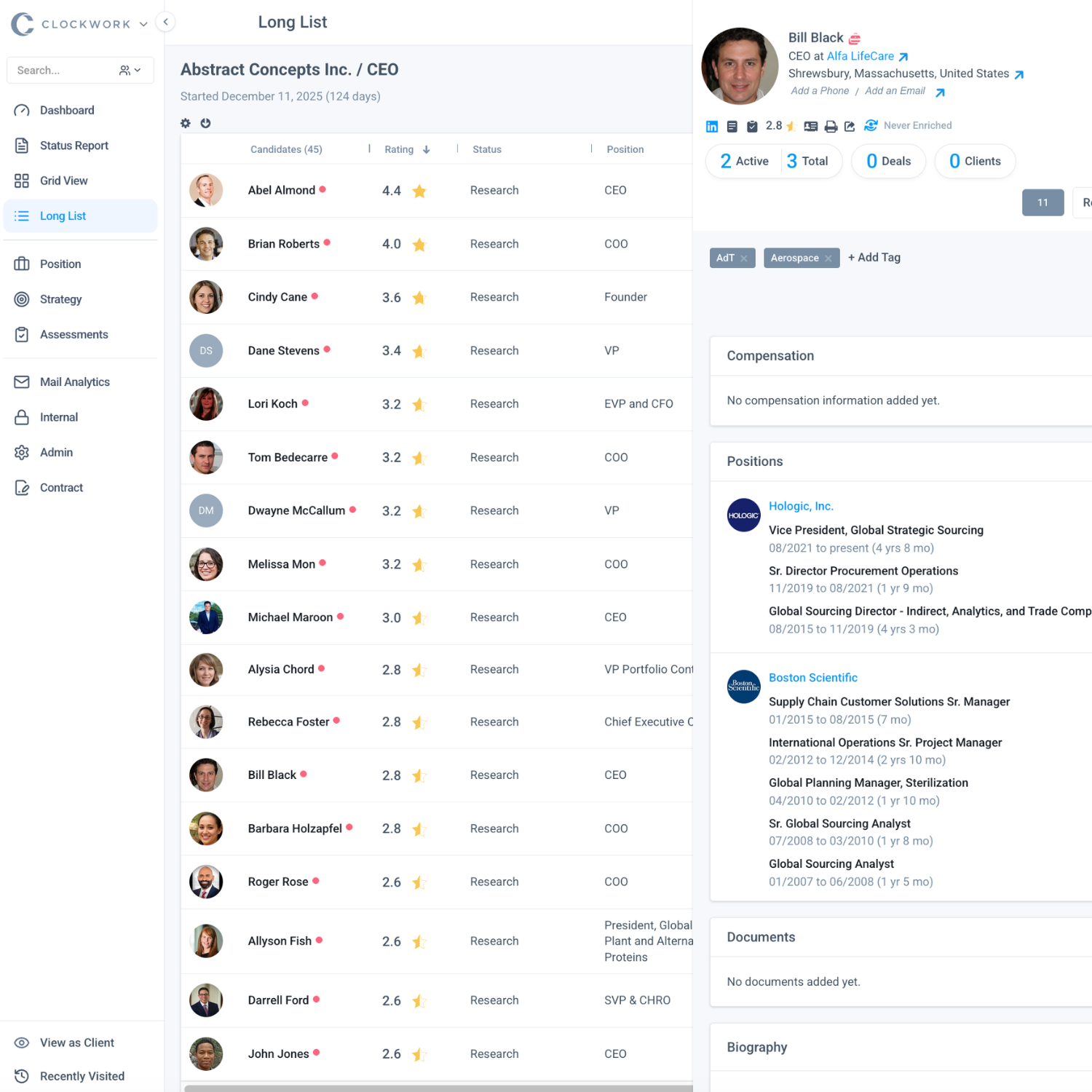
Clockwork enables teams to track candidates, progress, and engagement across multiple searches in real time.

- Best for: Firms that prefer a database-centric approach to organizing and managing candidate records
- Strengths: Established legacy database, flexible and basic data management, strong record-keeping capabilities
- Considerations: Less structured around end-to-end search execution and cross-search visibility
- Best for: Retained executive search firms (1–50 consultants)
- Strengths: Structured, process-led workflows, AI-powered sourcing and rediscovery, integrated reporting, full visibility across searches
- Considerations: Designed specifically for retained search rather than high-volume contingent recruiting
How to Evaluate Executive Search Platforms
Before comparing platforms in detail, it’s important to understand what actually drives performance for a retained search firm. Most executive search firms should evaluate platforms based on:
How closely the system aligns with your search process and workflows
High-level visibility across searches, teams and activity
Consistency in client reporting and experience
Ability to leverage firm intelligence and past searches
Scalability as your firm grows
Candidate & Project Management
Clockwork structures candidate data around active searches, and pipelines, ensuring that every interaction is tied directly to context. Longlists, shortlists, notes, client feedback, and candidate engagement are all managed and captured within the same platform, giving teams a clear, real-time view of progress. This approach makes it easier to track movement and build reusable pipelines.
FileFinder is centered around detailed candidate records, where recruiters log resumes, notes, and historical interactions within a centralized database. However, applying that data and context to an active search—such as tracking candidate progression, engagement, and pipeline movement—typically depends on how recruiters organize and manage records across assignments. This can make it more difficult to maintain a consistent, real-time view of search activity.
Client Reporting & Collaboration
Clockwork's client portal enables client reporting that is fully embedded within the platform. Candidate profiles, search updates, longlists, status reports and more are generated directly from live project data, ensuring accuracy, transparency and consistency. This allows partners and researchers and clients to collaborate in real-time, and deliver polished client updates and a seamless client experience.
FileFinder reporting requires search data and candidate exports for manual document generation. Reports, and profiles are typically exported, compiled and formatted outside the platform, requiring additional software and team hours spent producing static reports. Additionally, client feedback is decentralized and collated externally within shared documents and notes.
Search Workflows & Project Management
Clockwork is purpose-built for retained executive search, with configurable workflows that reflect how firms actually execute searches—from kickoff through research, longlists, shortlists, interviews, and placement. Each stage of the search is structured and trackable, ensuring consistency and performance across searches. This enables teams to scale more effectively and maintain alignment with clients without relying on side processes or external tools.
FileFinder supports search execution through a combination of database records, assignment tracking, and activity management. Firms can organize searches, attach candidates to assignments, and track search progress within the system, however, workflows are less structured. This can lead to variations in how recruiters run searches, requiring firms to frequently enforce, closely monitor and maintain process consistency.
Implementation, Adoption & Team Alignment
Clockwork is designed to standardize and streamline how retained search firms operate, making it easier to align teams around a consistent process from day one. Its structured workflows and intuitive interface help reduce onboarding time, while ensuring that best practices are embedded directly into the platform. This leads to stronger adoption across the firm, clearer visibility into search progress, and more predictable execution as teams grow.
FileFinder offers a solid foundation that firms can adapt to their existing ways of working. However, because processes are less standardized within the platform, adoption and consistency can vary between users or teams. This often places more emphasis on internal training and governance to ensure alignment in how searches, data, and workflows are implemented and executed across the organization. This can result in process breakdowns - where recruiters rely on external platforms and tools.
Data & Search Capabilities
Clockwork connects candidate data directly to active searches, enabling dynamic pipelines, contextual engagement tracking, and ongoing rediscovery of relevant talent. Rather than simply storing information, the platform continuously brings forward candidates based on search context, helping teams make better use of their historical data and reduce duplication of effort across searches.
FileFinder allows recruiters to run targeted searches and manually filter across the database. However, leveraging candidate data dynamically for active searches — such as surfacing top-tier candidates quickly based on past candidate performance — requires recruiters to spend time applying filters and tags, and deliberately building query strings to sift through their candidate records and resumes.
A.I. and Automation
Clockwork incorporates AI directly into sourcing, candidate rediscovery, and talent evaluation. The platform can surface and generate relevant candidates from across your database, assist in identifying strong matches, and help prioritize talent based on the context of an active search. This reduces time spent on early-stage research while improving the quality and consistency of candidate identification across the firm.
FileFinder’s approach to AI is limited and automation is centered more on structured database queries rather than optimizing AI. Recruiters can build detailed search criteria using fields, tags, and Boolean logic to identify candidates. However, identifying new or overlooked candidates typically depends on user inputs, rather than the system proactively discovering and surfacing recommended matches.
When Clockwork Is The Better Fit

- Retained executive search firms or search firms that follow a similar methodical approach to identifying and evaluating passive talent.
- Teams that need structured, repeatable, and streamlined workflows
- Firms looking to reduce manual reporting and optimize their process with built-in AI
- Executive recruiters that value transparency and efficiency, and follow a unique bespoke search process.
- Contingency executive recruiters
- Executive search firms that are operate exclusively as a contingent firm
- Staffing and recruiting agencies with high-volume staffing assignments
- Recruitment Process Outsourcing (RPO) organizations

Most firms evaluating platforms look at multiple options and want to understand how each fits their process
Continue Your Evaluation
How To Choose Executive Search Software
A step-by-step guide to evaluating platforms, key criteria, and common pitfalls.

Explore All Clockwork Comparisons
See how Clockwork compares to other executive search platforms.

Watch the Product In Action
Explore real workflows, reporting, and search execution in our product tour library.

Compare Clockwork vs Ezekia
See how Clockwork compares to another leading platform.


- How closely the platform aligns with your executive search process
- The level of flexibility required as the firm grows and your process scales
- How much you are currently spending on manual research and reports
- The importance of AI in optimizing and accelerating the search process

Still Comparing Options?
See How This Works in Practice
Choosing the right executive search platform ultimately comes down to how well it supports your firm’s workflow, your team, and your clients.
If you’re evaluating Clockwork alongside FileFinder, the best way to understand the difference is to see how these workflows compare in a real search scenario.